
What Is Tinnitus?
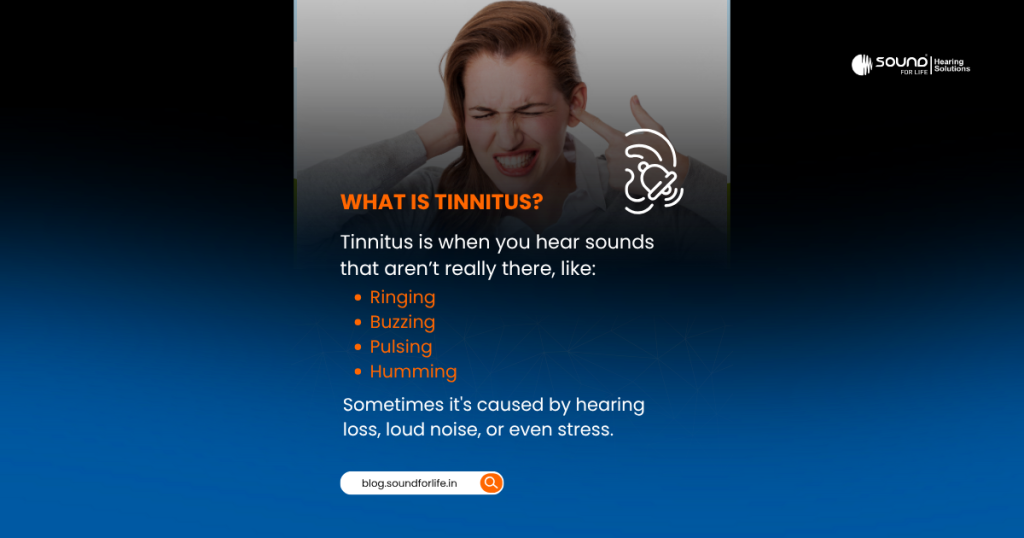
Tinnitus is the hearing of noises when there is no external source. These sounds might include:
The buzzing
The sound of ringing
Pulsing and humming
Clicking
Doctors may be able to infer the cause of the sound you hear from its type:
Muscle contractions close to your ear may be the cause of clicking noises.
Pulsing or rushing noises might be signs of blood vessel issues.
Low-pitched ringing may be caused by blockages in the ear canal, stiff inner ear bones, or Meniere’s disease.
High-pitched ringing, the most common type, is often caused by loud noise exposure, hearing loss, or certain medications. It might be challenging to identify the exact cause of tinnitus at times. Whatever the cause, the most crucial thing is to handle it effectively.
How Can Hearing Aids Help?
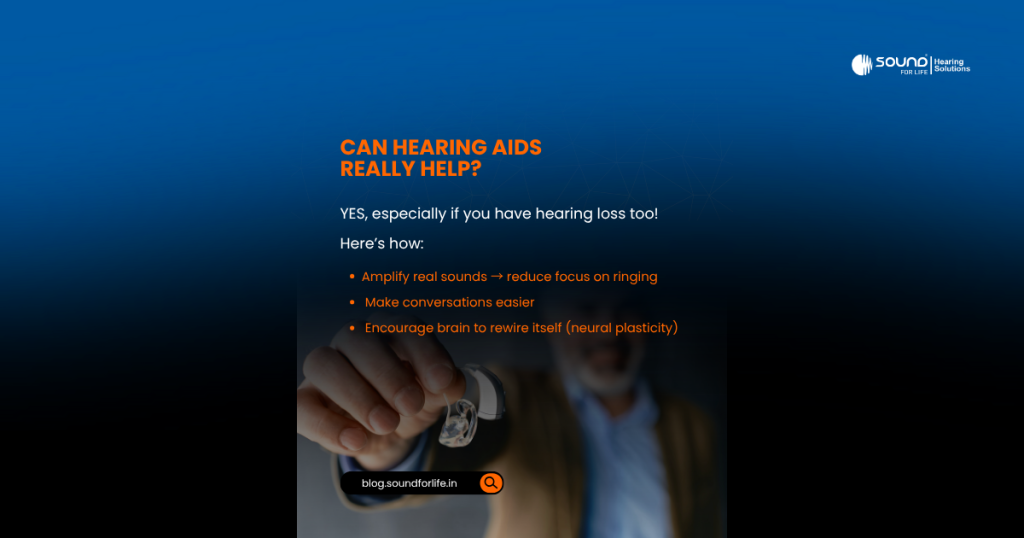
Hearing aids are an effective tool for many people dealing with tinnitus, especially if it’s related to hearing loss. Here’s how they work:
- Lack of awareness of Tinnitus
Your brain gets less information from the environment when you have hearing loss. Due to this lack of sound, the tinnitus seem louder and more noticeable. Hearing aids amplify external sounds, making them more prominent and helping your brain focus less on the ringing or buzzing sound in the ear. - Enhance Interaction
Tinnitus can make it difficult to hear outside sounds as the ringing in the ear often masks other sounds. Hearing aids boost external noises, making conversations easier to follow and reducing frustration. - Encourage Neural Plasticity
Sometimes, tinnitus is caused by changes in your auditory pathways due to a lack of sound input. Hearing aids provide stimulation to your auditory system, encouraging your brain to adapt and possibly reducing the perception of tinnitus over time.
Features to Look For in Hearing Aids

To get the most benefit from hearing aids for managing tinnitus, consider fitting hearing aids in both ears for balanced sound input.
- Choosing an open-ear design will be best since they provide a more natural listening experience, which can help reduce the perception of tinnitus.
- To be able to hear more clearly, select hearing aids with wide amplification bands, as they enhance sound clarity and make it easier to hear soft background sounds that may mask tinnitus.
- Avoid hearing aids with aggressive noise-reduction features, as these can eliminate sounds that help distract from the ringing or buzzing.
A professional audiologist can fine-tune your hearing aids to meet your unique hearing and tinnitus needs.
Other Ways to Manage Tinnitus
While hearing aids are a great option to manage Tinnitus, there are other ways to deal with it:
- Suppression of Noise
Tinnitus can be made less visible by masking its sound with fans, white noise generators, or soothing music. - Devices for Masking
These devices, to lessen Tinnitus, produce low-level white noise like soft humming sounds also known as white noise to relax the ear. - Counselling and Therapy
Therapy for Tinnitus Retraining (TRT): It retrains the brain to ignore Tinnitus. Cognitive behavioural therapy, or CBT, can teach you how to manage the emotional repercussions of tinnitus. - Lifestyle Changes
Limit your intake of caffeine, quit smoking, and alcohol. Regularly follow relaxing exercises like yoga or meditation. - Hearing Protection When you are in noisy places shield your hearing to avoid more harm.
When Should You See a Doctor?



No comments:
Post a Comment